


Differences Between Paraffin Candles and Soy Candles
When choosing a candle, scent and container design are usually the first details people notice. However, the wax type is also important. Paraffin candles and soy candles are both widely used, but they differ in source, burn character, scent experience, sustainability perception and the way they fit into daily home rituals.
Paraffin wax is a petroleum-derived wax, while soy wax is made from soybean oil. This difference affects how many users perceive the candle. Soy candles are often preferred by people looking for a plant-based wax option, while paraffin candles are known for their strong scent throw and common use in the candle industry. The best choice depends on your priorities: scent intensity, material preference, burn routine, container style and home atmosphere.

What Is a Paraffin Candle?
A paraffin candle is made with paraffin wax, a wax type derived from petroleum refining. It is one of the most common candle waxes because it is widely available, easy to shape and can hold fragrance well. Many decorative, colored and scented candles on the market use paraffin wax.
Paraffin candles can offer strong fragrance performance, but users who prefer plant-based materials may look for alternatives. Since the candle experience depends not only on the wax but also on fragrance quality, wick selection, container form and burning habits, paraffin candles can vary greatly from product to product.
What Is a Soy Candle?
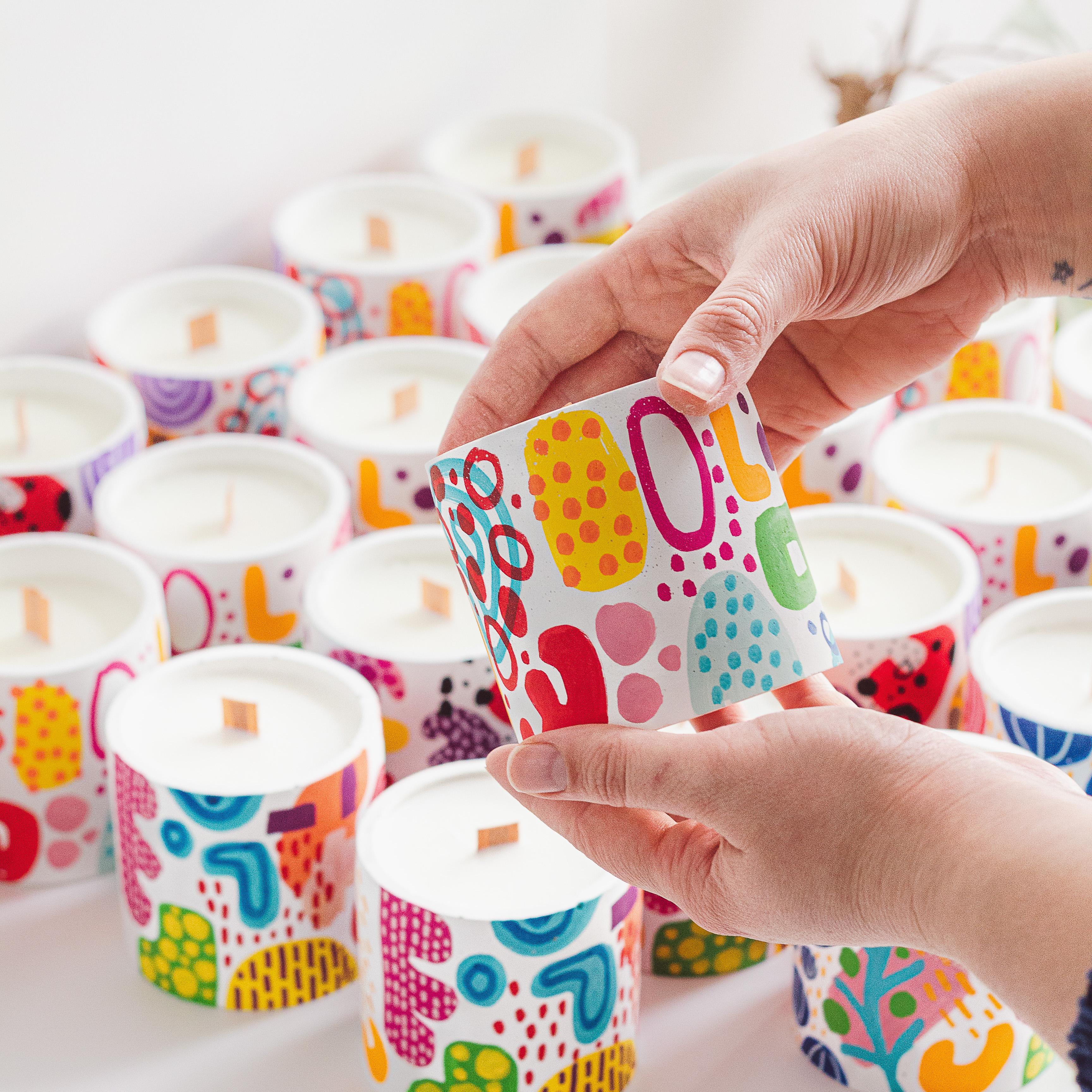
A soy candle is made with soy wax, which is produced from soybean oil. Because it comes from a plant-based source, soy wax is often preferred by users who want a more natural-looking candle option for their home. Soy candles are commonly used in container candles, especially glass, ceramic or concrete-covered candle designs.
Soy candles usually create a softer and calmer candle experience. They are often associated with slow home rituals, cozy corners, bedside tables, bathrooms and living rooms. When combined with a well-designed container, a soy candle can become both a fragrance product and a decorative object.
| Feature | Paraffin Candle | Soy Candle |
| Wax source | Petroleum-derived wax. | Plant-based wax made from soybean oil. |
| Scent character | Often known for strong fragrance throw. | Often preferred for a softer and balanced scent experience. |
| Material perception | More industrial and conventional. | More plant-based and home-ritual focused. |
| Best for | Users who prioritize strong scent and wide product variety. | Users who prefer plant-based wax and slower home fragrance rituals. |
Wax Source: Petroleum-Based or Plant-Based?
The clearest difference between paraffin and soy candles is the source of the wax. Paraffin wax comes from petroleum refining, while soy wax comes from soybean oil. For many users, this difference is enough to shape the purchasing decision.
If you want a plant-based candle experience, soy wax may feel more suitable. If your main priority is strong fragrance intensity and wide scent availability, paraffin candles may still attract attention. However, wax source should be evaluated together with wick quality, fragrance composition and safe use instructions.
Burn Experience and Candle Routine
The burn experience of a candle depends on more than wax type. Wick size, container width, fragrance load, room conditions and how the candle is burned all affect performance. A well-made soy candle can burn evenly and create a soft atmosphere when used correctly. A poorly used candle, regardless of wax type, may tunnel, smoke or burn unevenly.
For better candle use, the first burn should usually allow the wax surface to melt evenly across the container. The wick should be trimmed when needed, and the candle should be placed on a stable, heat-resistant surface. Safe use matters more than choosing wax type alone.
Scent Performance: Which One Smells Stronger?
Paraffin candles are often known for strong scent throw because paraffin can carry fragrance effectively. This is one of the reasons paraffin has been widely used in scented candles for many years. Users who want an intense and immediate fragrance may often notice paraffin candles more quickly.
Soy candles can also offer a pleasant scent experience, but they are often preferred for a softer and more balanced fragrance profile. The actual scent performance depends on the fragrance oil, wax blend, wick and container. For this reason, it is better to evaluate each candle individually rather than assuming that wax type alone determines scent strength.
Container Design and Reuse
Soy candles are often used in container designs such as glass jars, ceramic cups or concrete-covered vessels. This makes the candle not only a scent product but also a decorative object. The container can be part of a shelf, bedside table, bathroom counter, coffee corner or living room styling.
After the candle is finished, a well-designed container can sometimes be reused after proper cleaning. Glass containers can hold small bathroom items, ceramic containers can become jewelry holders, and concrete containers can be used as desk objects or small organizers. Product-specific cleaning and reuse instructions should always be followed.
Which Candle Is Better for Home Atmosphere?
For home atmosphere, the better candle is the one that matches your room, scent preference and visual style. A paraffin candle may be suitable if you want a strong scent and a wide range of fragrance options. A soy candle may be more suitable if you prefer a plant-based wax and a softer home ritual feeling.
If the candle will stay visible on a shelf or table, container design also matters. A glass soy candle can feel light and luminous. A ceramic soy candle can feel warmer and handmade. A concrete-covered soy candle can feel more modern and sculptural.
Safe Use Is Important for Both Candle Types
Whether you choose paraffin or soy, candle safety should always come first. A candle should be burned on a stable and heat-resistant surface. It should be kept away from curtains, papers, textiles and other flammable objects. It should never be left burning unattended.
Candles should also be kept away from children and pets. The container should be allowed to cool before being moved. Wick trimming, burn time and extinguishing method should follow the product-specific usage instructions. A good candle experience depends on careful use as much as material choice.
Which One Should You Choose?
Choose a paraffin candle if your main priority is strong scent performance, wide fragrance variety and conventional candle use. Choose a soy candle if you prefer a plant-based wax, a softer scent ritual and a container candle that can also work as a decorative object in your home.
For many users, soy candles feel more aligned with slow living, home styling and thoughtful daily rituals. When scent, wax, container and safe use come together, the candle becomes more than a fragrance product; it becomes part of the atmosphere of the room.


